
Blog
How to Choose the Right Wall Clock for Every Room in Your Home

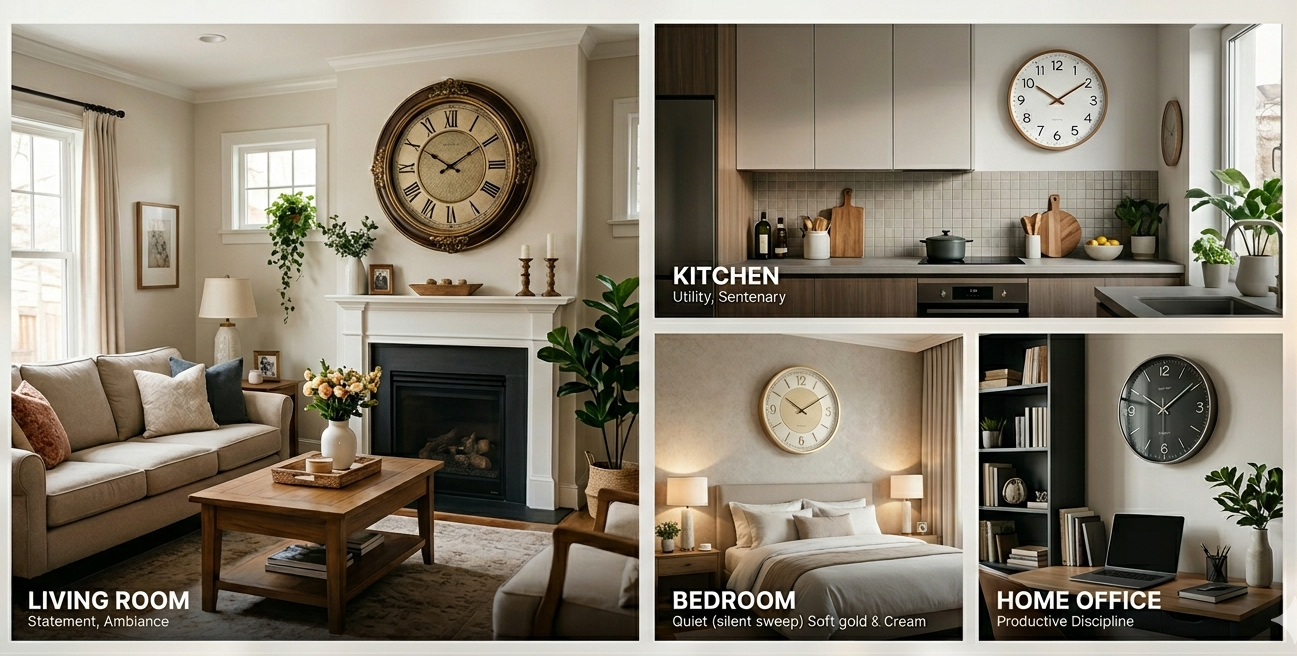
Let me ask you something. You’ve probably walked into someone’s drawing room in Karachi or Lahore and your eyes immediately landed on the wall — either because something looked amazing, or because something felt off. Nine times out of ten, it’s the wall clock.
A wall clock is not just a way to tell time. In Pakistani homes, it’s one of the first things guests notice. It sets the tone for the entire room. And yet, most people pick one in a rush — matching the wrong size to the wrong room, choosing the wrong style for the walls they have, or buying something that looks fine in a shop but feels completely out of place at home.
We’ve been helping customers across Pakistan style their homes, and the most common question we get is: “Which clock will look good in my room?” So we decided to write this guide — room by room, with honest advice on what actually works.
1. The Drawing Room — Make a Statement
Your drawing room is your home’s first impression. If there’s one room where you shouldn’t hold back on decor, this is it. The wall clock here needs to be bold, beautiful, and proportionate to the wall space you have.
Most drawing rooms in Pakistani homes have a main feature wall — often behind the sofa or above a side table. This is where your clock should go. And for this wall, size matters: go big or go considered. A 30cm clock on a large empty wall will look lost. A 60cm+ statement clock, on the other hand, becomes an instant focal point.
What works best:
• Imported clocks with Roman numerals or minimalist dials — they feel expensive without being loud
• Gold or bronze-finish clocks for homes with warm, earthy colour palettes
• Large silent quartz clocks — nobody wants ticking sounds when guests are talking
• Pair the clock with wall hangings on either side for a layered, finished look
2. The Bedroom — Calm, Clean, Functional
Your bedroom is where you start and end your day. The decor here should feel relaxing, not busy. A wall clock in the bedroom serves a real purpose — you glance at it when you wake up, when you’re getting ready, or just before sleeping.
This is not the room for oversized dramatic clocks. What you want here is something that blends into the aesthetic rather than demanding attention. Neutral colours, clean faces, and a silent mechanism are non-negotiable — especially for light sleepers.
If your bedroom has warm lighting (which most Pakistani bedrooms do), pair your wall clock with a touch lamp on the bedside table. The warm glow of a touch lamp at night, combined with a simple clock face, creates a bedroom that feels genuinely styled rather than just furnished.
What works best:
• Minimalist round clocks in white, black, or wood tones
• Small to medium sizes — 25cm to 35cm is usually right for bedrooms
• Silent quartz movement — absolutely essential
• Coordinate with your touch lamp and bedside accessories for a cohesive look
3. The Kitchen & Dining Area — Practical and Cheerful
Pakistani kitchens are busy spaces. The wall clock here needs to be readable at a glance — from across the room, while stirring a pot, or when you’re rushing to get the kids ready for school. Function comes first, but that doesn’t mean it has to be boring.
Kitchens and dining areas usually benefit from something with a bit of personality — a pop of colour, a vintage-style face, or a rustic wooden frame. These spaces can handle more playful decor choices than your drawing room.
On the dining table itself, small decor items like a tissue box holder and a centerpiece vase can tie the whole look together. A well-chosen clock on the wall above the dining area, paired with trendy decor accessories on the coffee table or sideboard, makes the space feel intentional and warm.
What works best:
• Medium-sized clocks with clear, easy-to-read numbers
• Vintage, farmhouse, or colourful styles — this room can handle personality
• Moisture-resistant materials if placing near the kitchen sink area
• Complement with a tissue box holder in a matching finish on the dining table
4. The Study or Home Office — Focused and Professional
If you work from home or have children who study, the home office or study room is a space that needs to feel productive. Clutter kills focus — so keep everything intentional.
A wall clock in a study should be clearly visible from your desk or workspace. You don’t want to keep looking at your phone — a well-placed clock on the wall keeps you on track without breaking your concentration.
Task lighting matters here too. A floor lamp in the corner not only improves lighting for late-night work sessions, it also adds visual height to the room — especially useful in smaller Pakistani apartments where ceilings can feel low. Pair a structured, no-nonsense clock with a good floor lamp and you’ve got a workspace that actually supports how you work.
What works best:
• Clean, professional-looking clocks — black and white or dark metal finishes
• Easy-to-read dials — digital or bold Arabic numerals
• Pair with a floor lamp in the corner for balanced lighting
• Keep the wall minimal — the clock can be the only decor element here
5. The Kids’ Room — Fun, Bright, Educational
Kids’ rooms are where you get to have real fun with decor. Bold colours, playful shapes, and educational clock faces all work here. Many parents in Pakistan use this opportunity to help children learn to tell time while also decorating the space.
You don’t need to spend a lot on a kids’ room clock — but do make sure it’s age-appropriate, clearly readable, and ideally silent (children are often light sleepers). Bright primary colours or themed clocks work well against white or pastel walls.
What works best:
• Colourful, themed, or cartoon-style clocks
• Clocks with both numbers and hour/minute hand markings for learning purposes
• Silent mechanism — children nap, light sleepers need quiet
• Place at child’s eye level, not adult height
General Rules for Every Room — The Basics Pakistani Homeowners Often Miss
Before we wrap up, here are a few rules that apply to every room — whether you’re shopping for trendy decor in Karachi or furnishing a new apartment in Islamabad:
Get the Size Right
The most common mistake is buying a clock that’s too small. Use this as a rough guide:
• Small rooms or bedrooms: 25–35cm diameter
• Medium rooms (dining, study): 35–50cm diameter
• Large drawing rooms or open spaces: 50cm and above
Match the Style, Not Just the Colour
A modern geometric clock will look odd in a room with traditional Pakistani furniture and heavy wooden frames. And a vintage-style imported clock will feel out of place in a sleek contemporary interior. Always look at the overall vibe of the room before buying.
Think About What’s Around It
A wall clock rarely stands alone. In Pakistani homes, it’s usually surrounded by wall hangings, family photos, or mounted shelves. Think about how your clock will interact with these other elements. Leave breathing room around the clock — don’t crowd it.
Silent vs. Ticking Movements
Unless you specifically like the sound of ticking (some people find it comforting), always opt for a silent quartz movement. It matters more than you think — especially in bedrooms and study rooms.
Final Thoughts
Decorating a home is deeply personal — and in Pakistan, where hospitality and the way our spaces feel to guests matters so much, getting the details right is worth the effort.
A wall clock is one of those details. It’s functional, yes — but in the right room, with the right design, it can completely transform how a space feels. Whether you’re drawn to a bold imported clock for your drawing room, a quiet minimalist piece for your bedroom, or something bright and fun for a child’s room, the key is to choose with intention.
At Wonders Decor, we’ve curated our collection specifically for Pakistani homes and tastes. From wall clocks and wall hangings to floor lamps, touch lamps, tissue box holders, and coffee table decor — everything is selected with a Pakistani home in mind. We deliver across Pakistan, with a growing number of customers calling us the best online home decoration shop in Karachi and beyond.
Frequently Asked Questions — Wall Clocks for Pakistani Homes
These are the questions our customers ask us the most — answered honestly, so you can shop with confidence.
Q: Which wall clock size is best for a Pakistani drawing room?
For a standard Pakistani drawing room, a clock between 40cm and 60cm in diameter works best. If your feature wall is large or the room is open plan, go for 60cm or above.
Q: Are silent wall clocks available in Pakistan?
Yes — and we strongly recommend them. Silent quartz wall clocks use a sweep mechanism instead of a tick-tock movement, which means zero noise.
Q: What is the difference between an imported clock and a local clock?
Imported clocks typically use higher-quality quartz movements, premium frame materials, and more precise timekeeping. Local clocks are often more affordable but may use lower-grade mechanisms that lose time or wear out faster.
Q: How do I choose a wall clock that matches my home decor style?
Start with your room’s existing colour palette and furniture style. For traditional Pakistani interiors with warm wood tones, go for gold, bronze, or antique-finish clocks.
Q: Can I use a wall clock in my bedroom without the ticking keeping me awake?
Absolutely — as long as you choose a silent quartz clock. Avoid any clock labelled as having a ‘step’ or ‘tick-tock’ movement for bedrooms.
Q: What home decor goes well with a wall clock in a Pakistani drawing room?
Wall clocks look best when paired with complementary decor on the same wall and in the same space. Try hanging decorative wall hangings on either side of the clock for a gallery-wall effect.
Q: Does Wonders Decor deliver wall clocks across Pakistan?
Yes. Wonders Decor delivers across all major cities in Pakistan including Karachi, Lahore, Islamabad, Rawalpindi, Faisalabad, and Peshawar.
